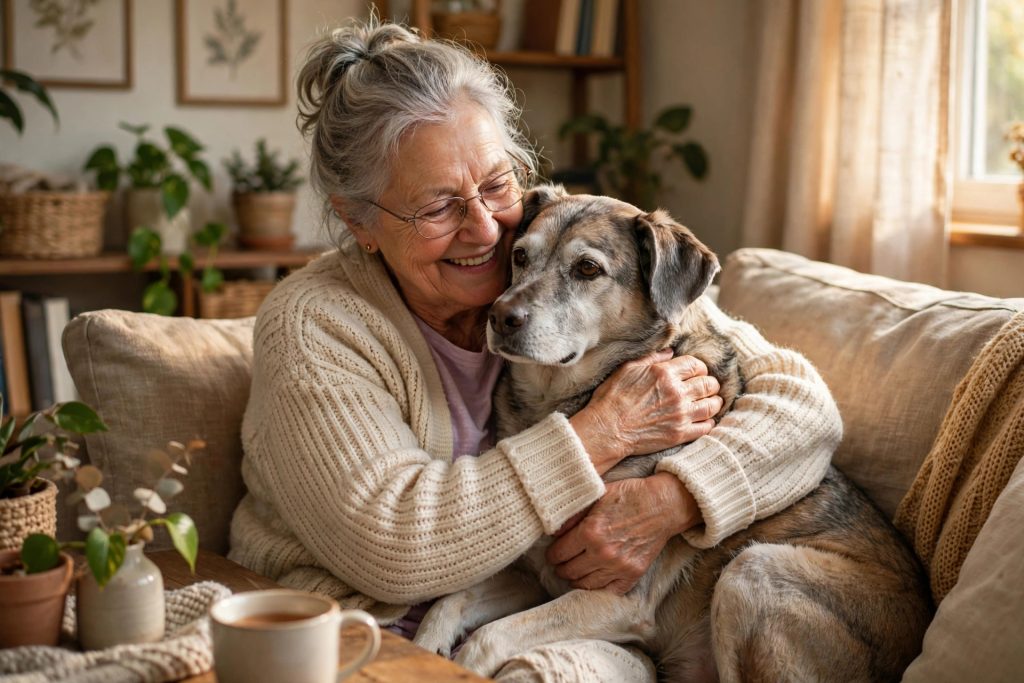
There is a quiet little idea in the animal-welfare world that just makes sense: seniors for seniors dog adoption programs match older adults with older dogs. The person gets a calm, house-trained companion who doesn’t need 10-mile hikes. The dog — the one everyone else walked past — gets a warm home and a person who is home a lot. Everybody wins, and this guide explains exactly how these programs work and how to find one near you.
What is a seniors for seniors dog adoption program?
It is a formal program run by a shelter, humane society or rescue that encourages older adults (usually 60+) to adopt senior pets (usually dogs age 7+). To make the match easier, programs typically offer some combination of:
- Reduced or waived adoption fees — sometimes $0 for the right match
- A free first vet visit or included health check
- Starter supplies — food, a leash, sometimes a bed
- Ongoing support — a phone number to call, and in some programs, help if the owner is hospitalised or can no longer care for the dog
Not every shelter uses the exact name “seniors for seniors,” so also look for terms like “senior adopter discount,” “golden companions,” or “pets for the elderly” programs.
Why shelters offer them
Senior dogs are the hardest to place and older adopters are, honestly, often the best match for them:
- A senior dog’s energy matches a quieter household — a gentle walk or two a day is plenty
- Older dogs are usually house-trained and past the destructive puppy stage
- Retired owners are home more, which is exactly what an older dog wants
- Studies and shelter experience both link pet companionship with lower loneliness and more daily routine for older adults
The discount isn’t charity — it’s a shelter recognising a good match and removing the one barrier (cost) that might stop it.
Who qualifies?
Rules vary by organisation, but the common pattern is:
- Adopter age: 60 or 65 and over (a few programs start at 55)
- Dog age: typically 7+, sometimes 6+ or defined by the shelter as “senior”
- Standard adoption application still applies — the program changes the fee and support, not the responsibility checks
You do not need to be retired, own your home in every case, or have previous dog experience — but be ready to talk about who would care for the dog if you were ill or away. Good programs ask, and it’s a fair question.
How much do you actually save?
A standard adult-dog adoption fee often runs $150–$400 depending on the region and what’s included. Under a seniors for seniors program, adopters commonly pay $0–$100, and the package often still includes spay/neuter surgery, vaccinations and a microchip — services that would cost far more at a private vet. Our full breakdown of senior dog adoption costs shows the normal numbers side by side.
How to find a program near you
- Start with your local humane society and county shelter. Call and ask directly: “Do you have a seniors for seniors program, or a senior adopter discount?” If the front desk says no, ask if any nearby rescue does — shelter staff usually know.
- Search the big listing sites (Petfinder, Adopt-a-Pet) for senior dogs, then check each rescue’s own website for an adoption-fees or programs page.
- Check senior-dog organisations. The Grey Muzzle Organization funds and lists programs for senior dogs across the US, and many of its grantee shelters run senior-focused adoption specials.
- Ask your local Area Agency on Aging or senior centre. Some keep lists of pet programs for older adults, including occasional pet-food and vet assistance.
- Watch for adoption events. “Clear the Shelters” and senior-pet month (November is Adopt a Senior Pet Month) often bring fee-waived weekends for older animals.
Questions to ask the program
- Is the fee fully waived, or reduced? What exactly is included?
- Is there a trial or foster-to-adopt period?
- What happens if I become unable to care for the dog — can the dog return to you?
- Is there any follow-up support — a helpline, check-in calls, a vet partner?
- Are there income limits or paperwork beyond the normal application?
That third question matters more than people think. A program that guarantees the dog can come back to them, no judgement, is a program that has thought about your real life.
No program near you? You still have options
If your local shelter has no formal program, ask anyway — many will quietly discount a senior dog’s fee for a senior adopter, especially for a dog who has been waiting a long time. You can also look at our guide to finding senior dogs for adoption near you, and consider fostering: rescues cover food and vet bills for foster carers, and “foster fails” (falling in love and adopting your foster dog) are a beloved tradition.
The bottom line
Seniors for seniors programs exist because the match works: a calm older dog, a person with time and love to give, and a fee that doesn’t stand in the way. One phone call to your local shelter is all it takes to find out what’s available near you — and there may be a grey-muzzled dog there right now, waiting for exactly that call.