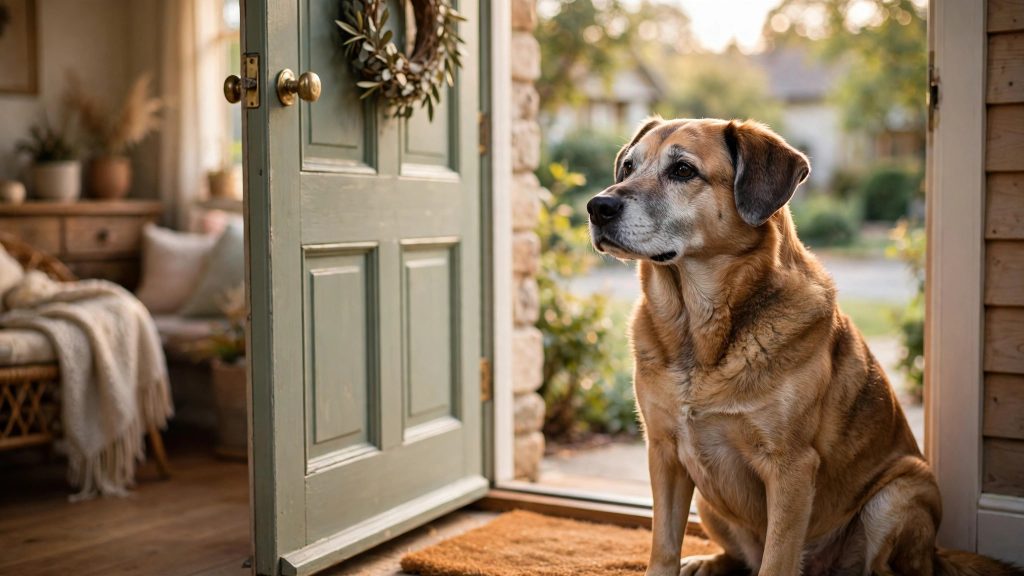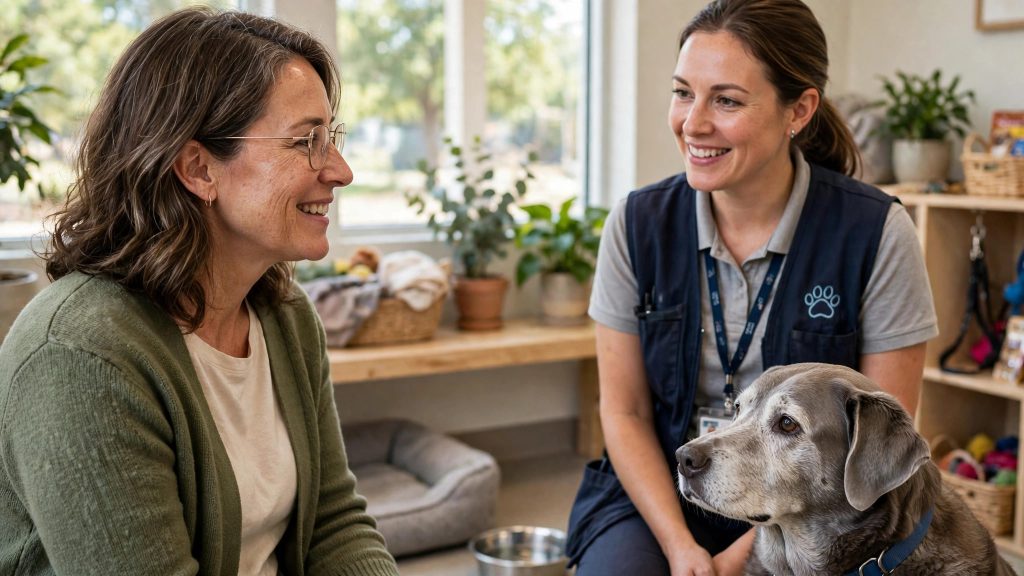
The best thing about adopting a senior dog is that there are no surprises hiding in a puppy’s future — the dog in front of you is the dog you get. But you only learn his story if you ask. These are the questions to ask when adopting a senior dog, grouped by topic, with what a good answer sounds like.
About his health
- What health issues does he have right now? Good shelters and rescues share vet records openly — arthritis, heart murmurs, dental disease are all normal at this age; what matters is honesty.
- What medication is he on, and what does it cost monthly? Add it to your budget (our cost guide shows how the numbers stack up).
- When was his last vet check and blood work? Within the last few months is a good sign.
- Is he up to date on vaccinations, flea and worming treatment?
- Has he had dental work — or does he need it? Dental bills are the most common surprise cost in senior dogs.
About his behaviour and history
- Why was he surrendered? Moving, owner illness and bereavement are common and say nothing bad about the dog.
- How is he with children, cats and other dogs? Ask for specifics, not just “fine.”
- Is he house-trained? Most adult dogs are; occasional accidents in week one are normal (see the first-week guide).
- Any fears or quirks? Thunder, men in hats, slippery floors — every old dog has something; knowing in advance is kindness.
- How does he do alone? Separation anxiety shows up in rehomed dogs of any age.
About his daily routine
- What food is he on, and how much? Keep it the same at first; sudden changes upset old stomachs.
- How much exercise does he actually enjoy? Not the breed average — his answer.
- Where does he sleep, and what comforts him? A blanket that comes with him is worth more than a new bed on day one.
- What does his best day look like? The loveliest question on this list — staff who know him will light up.
About the adoption itself
- What’s the fee, and is there a senior discount? Many shelters run seniors-for-seniors programs with reduced or waived fees.
- Is there a trial or foster-to-adopt period? A week or two at home reveals more than any kennel visit.
- What if it doesn’t work out? A good rescue always takes their dogs back — this answer tells you a lot about the organisation.
- What support do you offer after adoption? Behaviour helplines, vet partner discounts and follow-up calls are all good signs.
- Can I meet him more than once / take him for a walk first? You should, and they should be glad.
Red flags in the answers
- Vague or annoyed responses to health questions
- No vet records available at all
- Pressure to decide today
- Refusal to take the dog back under any circumstances
The bottom line
Ask about health, history, routine and the adoption terms — and listen for openness. A shelter that answers happily and honestly is showing you exactly how they’ll treat you after the adoption too. Ready to start meeting dogs? Our guide to finding senior dogs for adoption near you shows where to look.