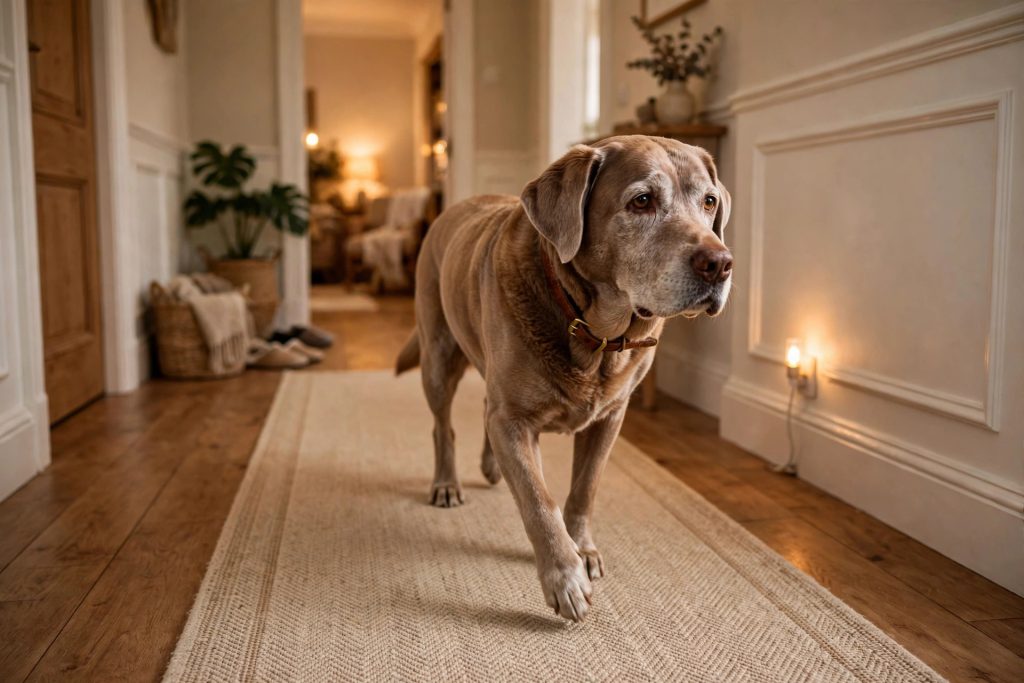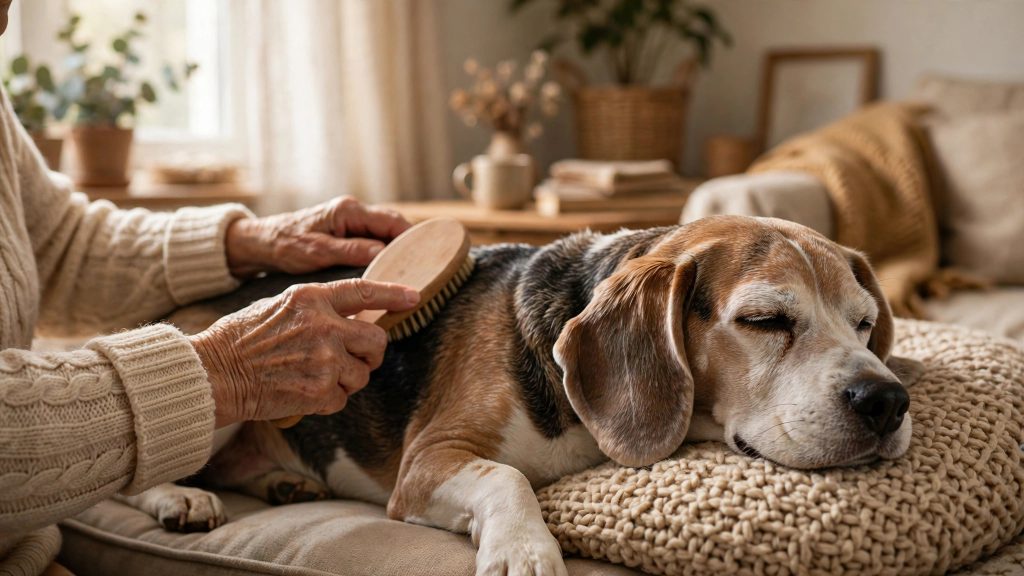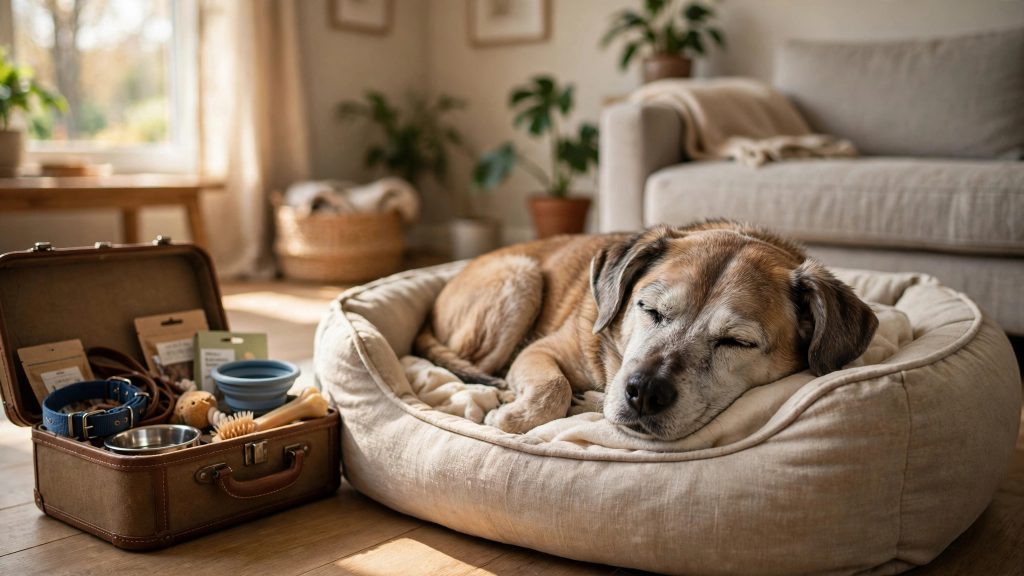
The first week with your senior rescue dog is not about training, socialising or showing them off. It’s about one thing: helping an older dog who has lost their whole world feel safe in a new one. Here is a calm, day-by-day checklist for that first week — what to do, what to skip, and what is completely normal (even when it doesn’t feel like it).
Before Day 1: the 30-minute setup
- One quiet corner with a supportive dog bed, water bowl and a blanket — this is “their place”
- Food: the same food the shelter was feeding (ask for a few days’ supply) to avoid an upset stomach
- Leash, collar or harness, and poop bags by the door
- Stairs blocked or a ramp ready if your dog is stiff or arthritic
- The vet’s phone number saved, and the shelter’s number too
Day 1: Homecoming
Do: Drive home calmly, let them sniff the garden or yard first, then walk them straight to their bed corner and water. Offer a small meal. Let them sleep — shelter life is exhausting and noisy, and deep sleep on day one is a good sign.
Skip: Visitors, baths, the dog park, and a grand tour of every room. One or two rooms is plenty.
Normal: Not eating much, panting, following you from room to room — or the opposite, wanting to be left alone. Both are fine.
Day 2: Routine begins
Start the skeleton of your routine now, gently: wake-up toilet trip, breakfast, a short walk, rest, dinner, evening walk, last toilet trip before bed. Same order, same times, every day. Senior dogs relax into routine faster than puppies do — predictability is comfort.
Walk length: 10–15 minutes is enough. Let sniffing set the pace.
Day 3: The appetite and toilet audit
By day 3, note the basics:
- Eating and drinking normally?
- Peeing and pooping on a roughly predictable schedule?
- Any coughing, limping, straining or confusion to tell the vet about?
Write it down — this little log is gold at the first vet visit. (And yes, an accident or two in the house is normal, even for a house-trained dog. Clean, don’t scold.)
Day 4: First vet visit (or book it today)
If you haven’t already, get the first vet check done this week: records review, teeth, joints, heart, and senior blood work as a baseline. Bring your day-3 notes and every paper the shelter gave you. Our guide to what senior dog adoption really costs covers what this visit typically runs.
Day 5: Gentle exploration
Open up one more room. Try a slightly different walking route. Introduce one toy or a gentle game — many senior dogs haven’t played in a long time and warm up slowly. Short, kind training moments (name recognition, “come” for a treat) build trust faster than anything.
Day 6: One small real-world test
A slightly longer walk, a calm visitor for a short time, or a brief car ride — pick one, keep it easy, and watch your dog’s signals: relaxed body and soft eyes mean carry on; tucked tail, panting or hiding means that’s enough for today. There’s no deadline on any of this.
Day 7: Look how far you’ve come
By the end of week one, most senior rescue dogs have picked their favourite spot, learned where the treats live, and started to believe this might be permanent. Keep the routine rolling into week two, start any vet-recommended medication or joint supplements, and plan on the 3-3-3 rule: 3 days to decompress, 3 weeks to learn your routine, 3 months to feel truly home.
First-week red flags — call the vet if you see:
- Not eating at all for more than 24–36 hours
- Vomiting or diarrhoea that doesn’t settle within a day
- Straining to pee or poop, or blood in either
- Collapse, severe limping, or sudden confusion
- Non-stop panting, pacing or crying through the night
The bottom line
Quiet, routine and patience — that’s the whole secret of the first week with a senior rescue dog. You’re not behind if your dog still seems unsure on day seven; you’re building something that takes a few weeks to bloom. Give it time, and one morning soon you’ll wake up to a tail thumping against the floor, from a dog who knows they’re home.