An older dog’s body runs differently from a young dog’s — and his food should change with it. The best food for senior dogs isn’t the most expensive bag on the shelf; it’s the one that matches his slower metabolism, his joints, his kidneys and his appetite. Here is how to choose well without overthinking it.
What changes as a dog gets older
- Slower metabolism. Most seniors need roughly 20–30% fewer calories than they did in their prime. Feed yesterday’s portions and the weight creeps on — and extra weight is the fastest way to make old joints ache more.
- Protein still matters. Old advice said to cut protein for senior dogs. Modern guidance is the opposite for healthy seniors: good-quality, easily digestible protein helps them keep the muscle that carries them.
- Joints need support. Foods with glucosamine, chondroitin and omega-3 fish oils (EPA/DHA) genuinely help stiff, arthritic dogs.
- Digestion gets touchier. A little extra fibre helps keep older bowels regular, and highly digestible ingredients mean smaller, less dramatic outputs.
- Kidneys and heart. If your vet has flagged kidney or heart issues, then a specific therapeutic diet matters — that’s a vet conversation, not a marketing label.
What to look for on the label
- A named meat (chicken, salmon, lamb) as the first ingredient — not “meat derivatives” or a grain.
- A life-stage statement for senior or mature dogs, or an all-life-stages food from a reputable maker.
- Moderate calories per cup, clearly printed — you can’t manage portions you can’t measure.
- Added joint support and fish oil are a genuine bonus, not just packaging claims.
- A feeding guide you can actually follow by weight.
Wet food, dry food, or a mix?
- Dry kibble is economical and helps scrape teeth a little — but many old mouths with missing or sore teeth struggle with it.
- Wet food is softer, smellier (in a good way — it tempts picky eaters) and adds hydration, which helps kidneys. It’s pricier and worse for teeth.
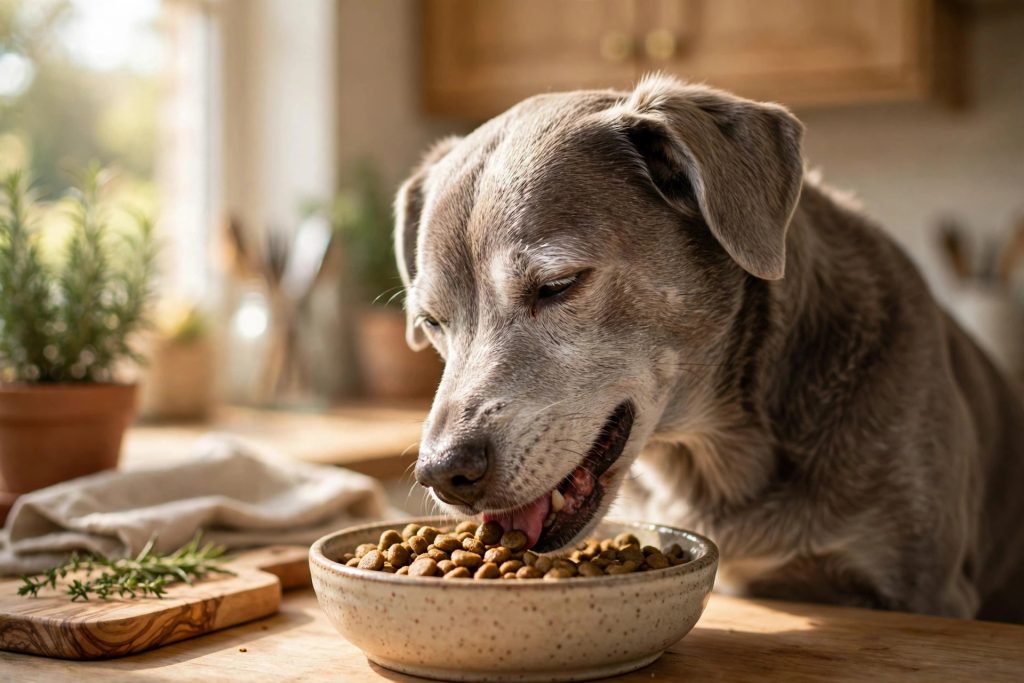
- A mix is what most senior owners land on: kibble softened with warm water or a wet topper. Warming food slightly releases smell and makes it far more appealing to an old nose.
How much, and how often
Feed by the guide on the bag for your dog’s target weight, then adjust by eye: you should feel ribs easily under a thin layer of fat, and see a waist from above. Two smaller meals a day suit most seniors better than one big one — gentler on digestion and on blood sugar. And weigh the food with a kitchen scale for the first week; cups lie, grams don’t.
When a senior dog won’t eat
A day of pickiness after a change of home or routine is normal (our first-week guide covers settling-in quirks). Try warming the food, hand-feeding the first few bites, or adding a spoon of plain cooked pumpkin or bone broth. But no appetite for more than 24–48 hours, or appetite loss with vomiting, weight loss or lethargy, is a vet visit — in an old dog, “off his food” is often the first sign of something that matters.
Foods to keep away from old dogs
Chocolate, grapes and raisins, onions, xylitol (in sugar-free products), cooked bones and fatty table scraps — the usual list, but seniors pay for mistakes faster. Rich “treats” from the table are also the quiet reason many old dogs gain weight while their owners swear the portions are small.
The bottom line
Pick a quality senior food with named meat first, watch the calories, support the joints, and feed measured portions twice a day. Then let your dog vote: bright eyes, steady weight, good energy and tidy stools mean you’ve chosen well. Food is one part of the whole picture — our senior dog care checklist puts it alongside vet care, exercise and comfort.