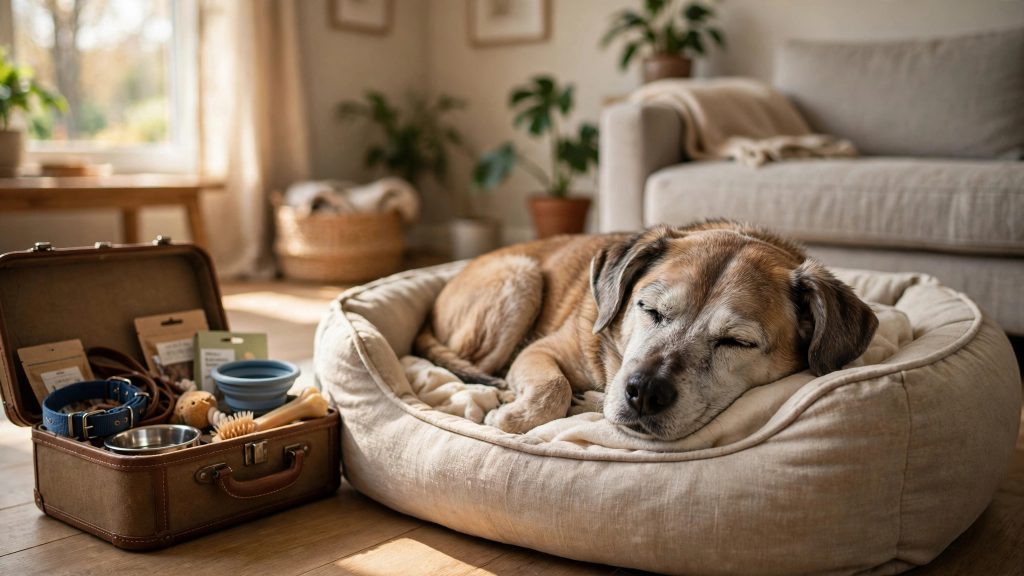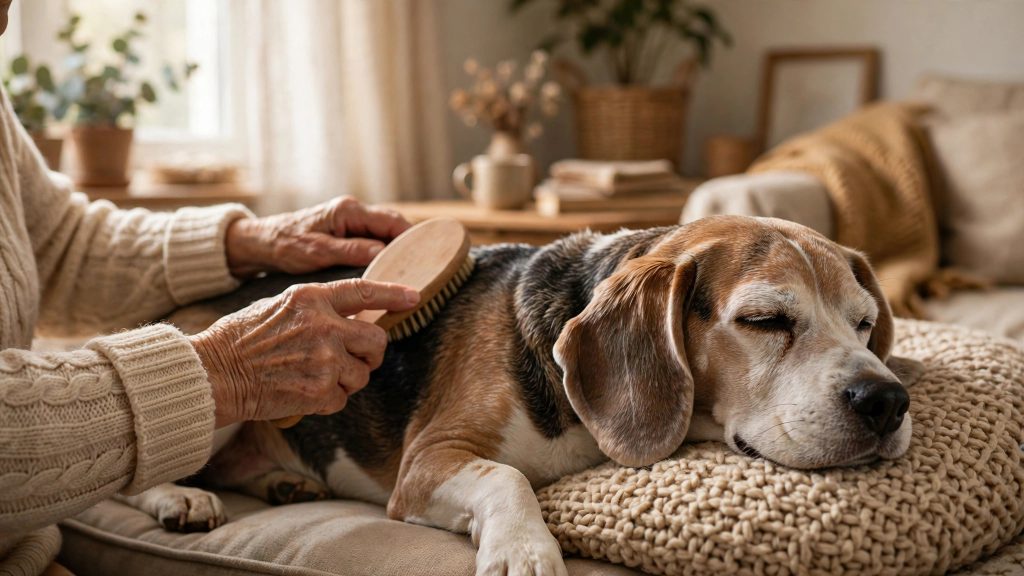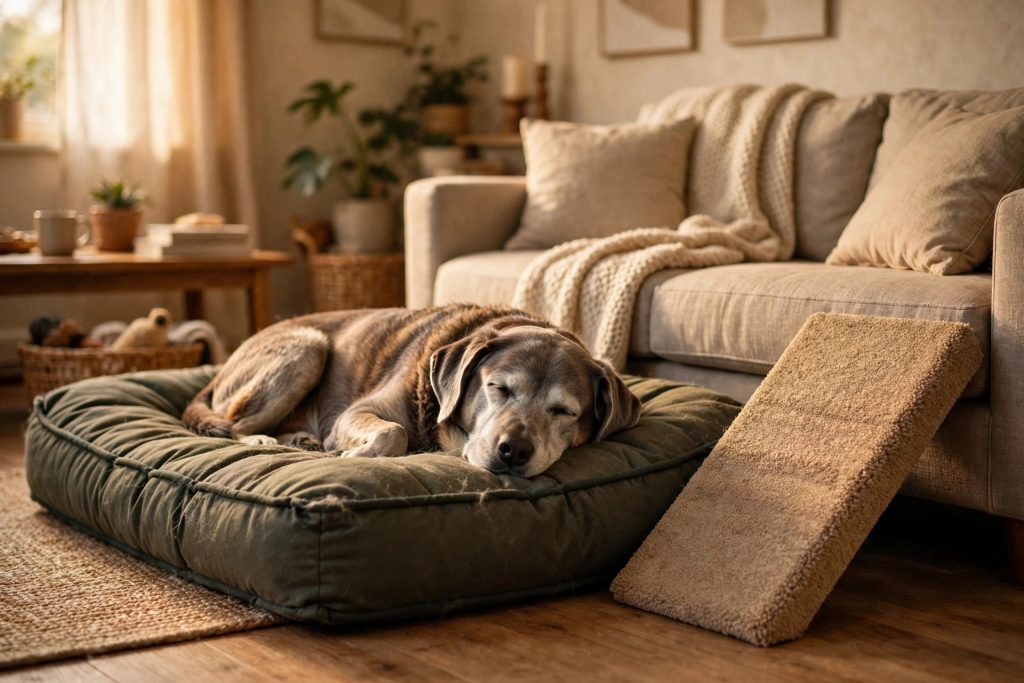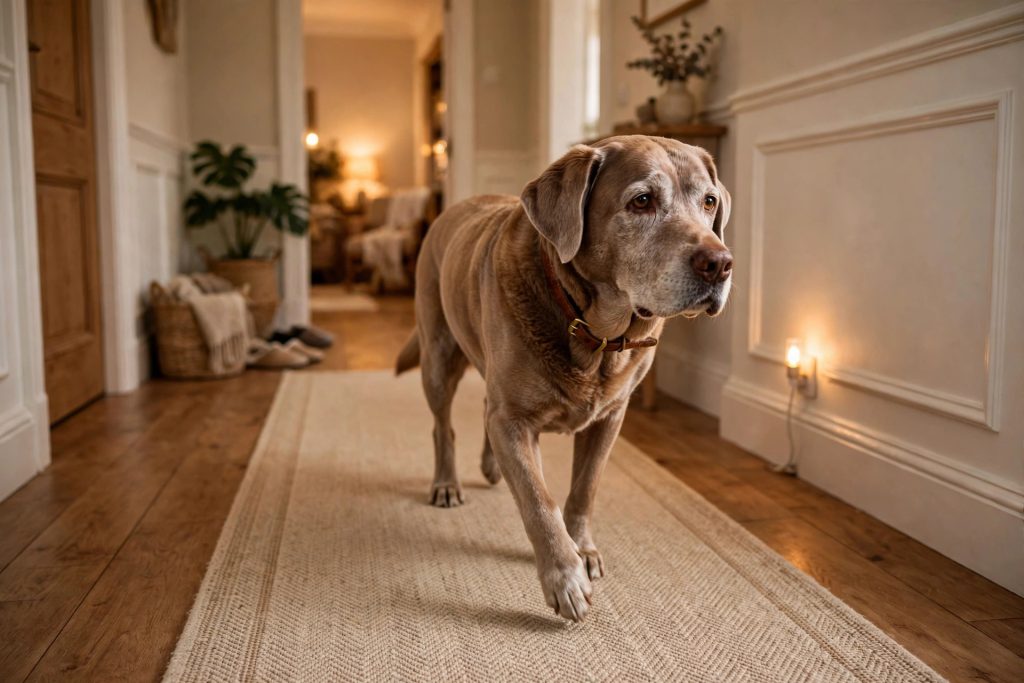
An older dog sees your home differently than a young one. Floors that were fine at age three become skating rinks at age twelve. Stairs that were nothing become a daily risk. The good news: senior-proofing your home is mostly cheap, quick changes — an afternoon of small fixes that can prevent the fall that changes everything.
Start with the floors (the #1 risk)
Slippery floors are the biggest everyday danger for senior dogs. Splayed legs strain arthritic joints, and one bad slide can mean a torn ligament or a hip injury.
- Rug runners and mats: lay non-slip runners along the routes your dog walks most — hallway, kitchen, between bed and door. Yoga mats work too.
- Toe grips or paw wax: for dogs who hate rugs everywhere, anti-slip paw products add traction.
- Trim the nails and paw fur: long nails and furry paw pads both reduce grip. Our senior dog care checklist covers how often.
Stairs, sofas and beds: give them a ramp route
Jumping down is harder on old joints than jumping up — and stairs get risky as eyesight and balance fade.
- Ramps beat steps for most senior dogs: gentle slope, high-traction surface, and wide enough to feel secure. Our guide to beds, ramps and steps for senior dogs explains what actually helps.
- Block stairs your dog doesn’t need with a baby gate, especially at night.
- Lift, don’t let them leap: small dogs especially — make lifting them on and off furniture the habit.
Lighting for fading eyes
Many senior dogs develop cloudy eyes and poor night vision. A dog who hesitates at a dark hallway isn’t being stubborn — he genuinely can’t see well.
- Plug in night lights along the route from his bed to the door.
- Keep a lamp on in the evening in rooms he uses.
- Don’t rearrange furniture often — senior dogs navigate partly by memory.
The feeding station
- Raised bowls (elbow height) ease neck and shoulder strain for medium and large dogs.
- A non-slip mat under the bowls stops the whole station travelling across the kitchen.
- Keep food and water in one consistent place, on the route he walks anyway.
Bathroom access
Older bladders need shorter trips:
- Keep the path to the garden door clear and lit.
- If there are steps outside, add a ramp there too.
- For apartment dogs, a balcony grass pad can save a 3 a.m. elevator panic.
Small hazards sweep
Get down to dog height and look: trailing cables, low coffee-table corners at eye height for a dog whose vision is going, cleaning chemicals in low cupboards, small objects on the floor. Ten minutes, once — done.
A proper rest zone
Set up one quiet corner that is fully his: orthopedic bed, away from drafts and household traffic, on a non-slip surface. Senior dogs sleep 18–20 hours a day, and quality rest is real medicine at this age (more in our guide on why senior dogs sleep so much).
The bottom line
Senior-proofing isn’t a renovation — it’s runners on the slippery routes, a ramp where he used to jump, light where he walks at night, and bowls at a kind height. Do the floors first; they matter most. If your old dog arrived recently, pair this with our first-week checklist and he’ll feel at home faster than you expect.