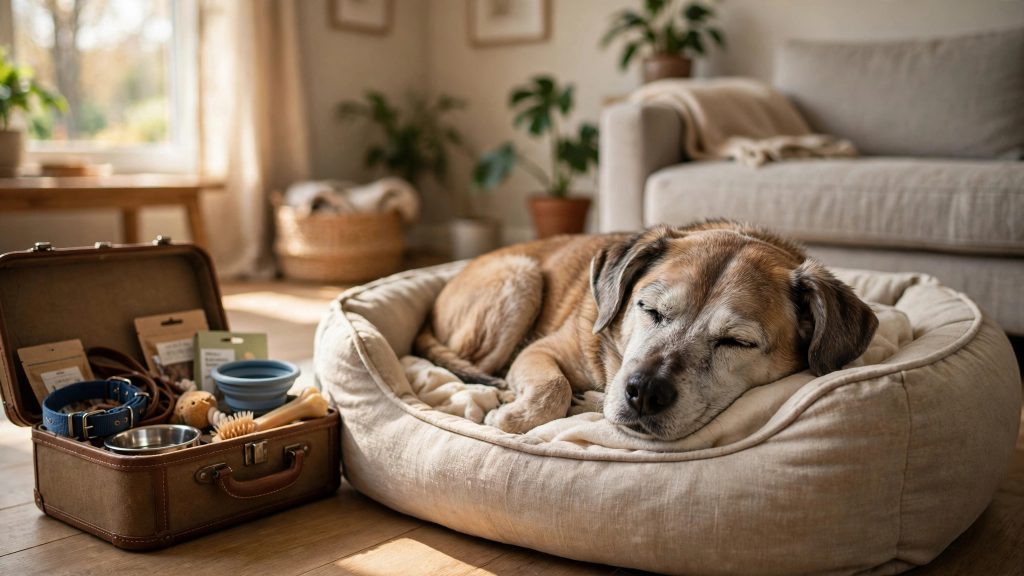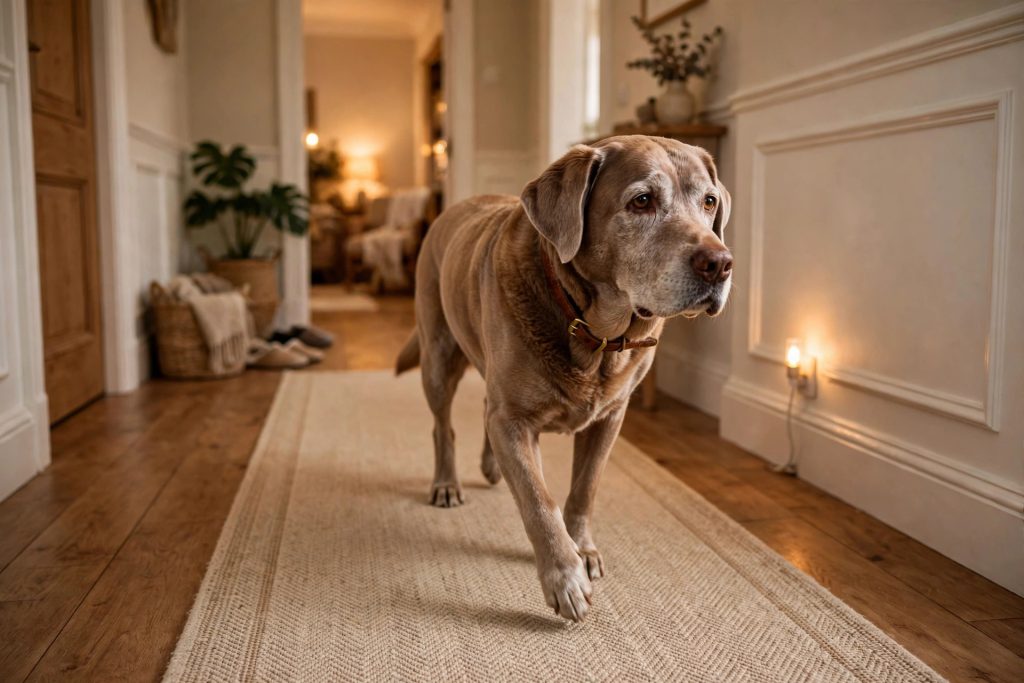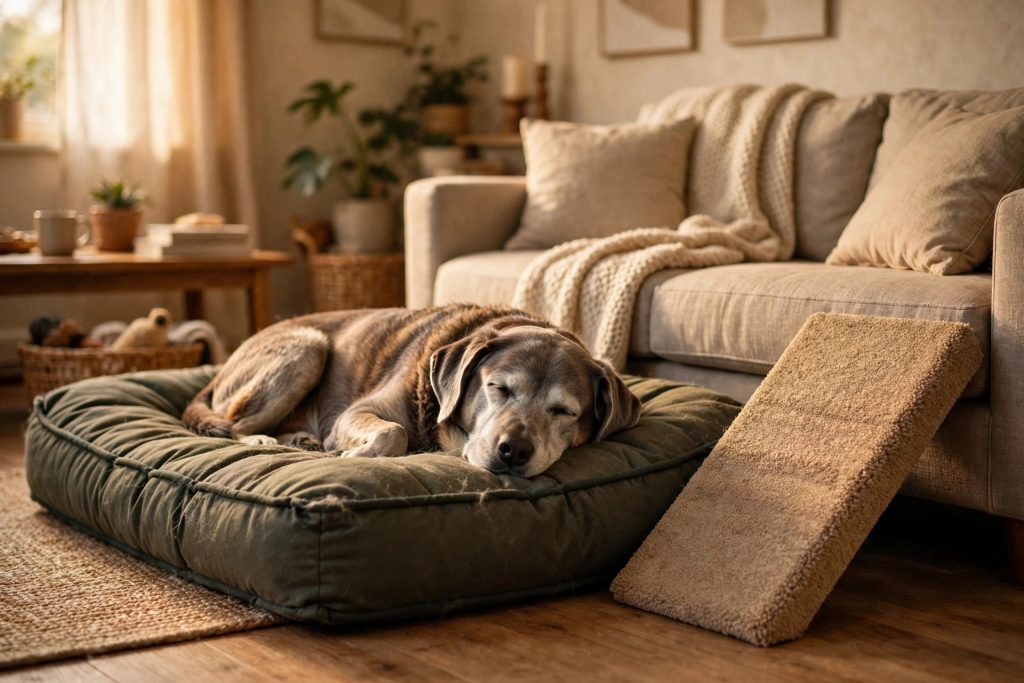
Caring for a senior dog isn’t harder than caring for a young one — it’s just more deliberate. Little things done regularly (nails, teeth, weight, comfort checks) prevent the big things. This senior dog care checklist breaks it into daily, weekly and monthly rhythms you can actually keep.
Daily care
- Two or three short walks rather than one long one — gentle, at his pace, with sniffing time. Sniffing is mental exercise.
- Fresh water check — senior dogs, especially those with kidney issues, need constant access; note if drinking suddenly increases (tell your vet).
- Meals on schedule — consistent times help digestion and toilet routines.
- A quick comfort scan: eating normally? Moving like yesterday? Bright or unusually quiet? Ten seconds, every day, catches problems early.
- Toilet breaks more often — older bladders can’t wait like they used to.
- Company and touch — most senior dogs’ favourite medicine.
Weekly care
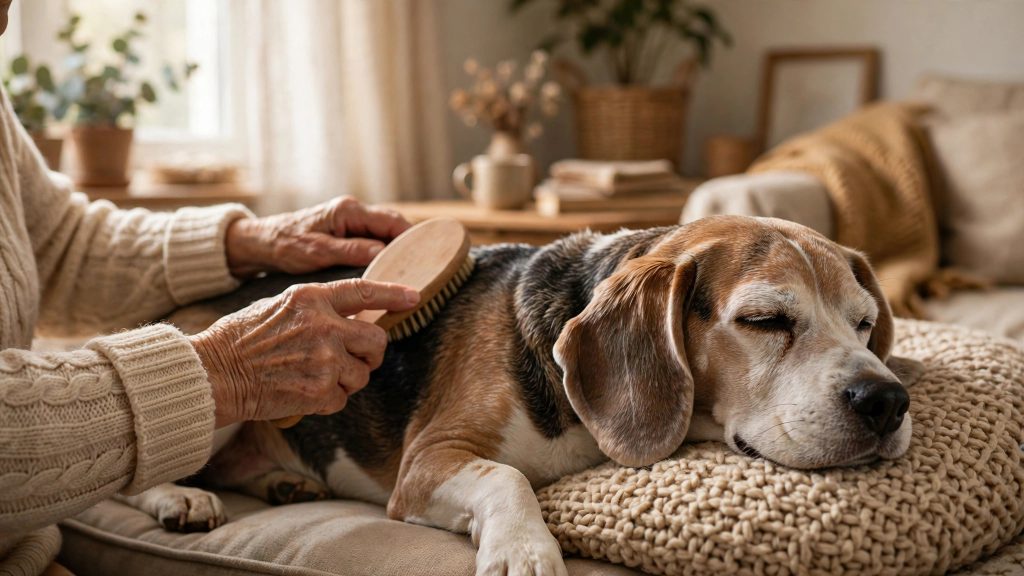
- Brush once a week (more for long coats) — and use it as a body check: run your hands over him for new lumps, bumps, sore spots or ticks. Note anything new and mention it at the next vet visit.
- Nail check — if you hear clicking on hard floors, they’re too long. Trim weekly in small amounts, or ask your vet/groomer to.
- Ear check — a quick look and sniff; redness or a bad smell means a vet call.
- Bedding wash — old dogs (and their beds) get whiffy; a weekly wash keeps skin happier.
- Weight feel — you should feel ribs under a thin fat layer, not see them, not hunt for them.
Monthly care
- Weigh him — unexplained weight loss or gain in a senior dog is always worth a vet conversation.
- Teeth check — lift the lip: heavy tartar, red gums or bad breath point to dental disease, which is painful and very common in old dogs. Daily brushing is ideal; even a few times a week helps.
- Flea and worming treatments on schedule, per your vet’s advice.
- Review medications and supplements — is the joint supplement actually helping? Note mobility changes.
- Photo of him — seriously. A monthly photo makes slow changes (weight, coat, posture) visible.
Twice a year (the senior rule)
- Vet check every 6 months — for senior dogs this replaces the annual visit. Blood work at least once a year catches kidney, liver and thyroid problems while they’re still manageable.
- Senior blood panel and urine test as your vet recommends.
- Review vaccinations, dental health and weight with fresh eyes.
Seasonal extras
- Winter: a coat for thin or arthritic dogs, shorter walks in the cold, wiped paws after salted pavements.
- Summer: never walk in midday heat; old dogs overheat fast. Cool mats, shade, water everywhere.
The bottom line
Print this checklist, stick it on the fridge, and let rhythm do the work: small daily kindnesses, a weekly hands-on check, a monthly weigh-in, and a vet visit every six months. That’s 90% of great senior dog care. Setting up the home itself matters too — see our guide to senior-proofing your home — and if your dog is newly adopted, start with the first-week checklist.