
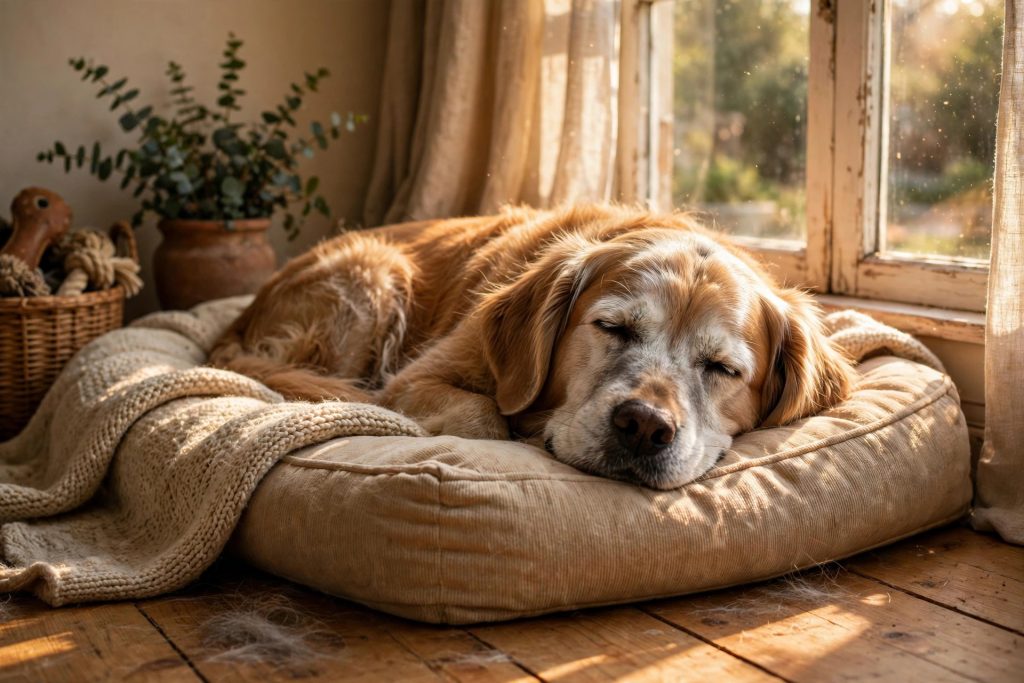
If your senior dog seems to sleep all day, you’re not imagining it — and you’re not alone in worrying about it. The reassuring truth: a big increase in sleep is one of the most normal parts of getting old, for dogs just as for people. Here’s how much is normal, why it happens, and the changes that should send you to the vet.
Quick note: this article is general information from experienced dog people, not veterinary advice. Your vet knows your dog — when in doubt, ask them.
How much sleep is normal for a senior dog?
- Adult dogs typically sleep 12–14 hours a day.
- Senior dogs commonly sleep 18–20 hours a day — and for the oldest or largest breeds, even a little more can be normal.
What matters more than the total is the pattern: a healthy senior sleeps a lot but still wakes up interested — in food, in you, in a gentle walk. Sleep that comes with enthusiasm for life in between is usually just ageing.
Why senior dogs sleep so much
- Slower metabolism and ageing body — everything takes more energy, so rest does more of the work.
- Achy joints and arthritis — moving is effortful; resting is relief.
- Weaker senses — with less sight, hearing and smell to process, the world is simply less stimulating.
- Brain ageing — older brains tire faster, like older people’s.
- Bigger recovery needs — a 20-minute walk may genuinely require a two-hour nap to recover from. That’s fine.
Making sleep better (not just longer)
- An orthopedic bed in a quiet, draft-free spot — see our guide to beds, ramps and steps for senior dogs.
- A consistent routine — same walk, meal and bedtime anchors help old brains settle.
- Gentle daytime activity — short walks and sniff games mean deeper, healthier sleep (and less night-time restlessness). Our senior dog care checklist shows a good daily rhythm.
When sleeping a lot IS a warning sign — see your vet
Book a vet visit if the extra sleep comes with any of these:
- Sudden change — sleepiness that ramps up over days, not months
- Loss of appetite or skipping meals he’d normally enjoy
- Not wanting to get up for walks or toileting, or accidents from not waking
- Confusion — staring at walls, getting stuck in corners, pacing at night (possible canine cognitive dysfunction)
- Weight loss, heavy panting, coughing, pale gums, or drinking much more than usual
- Pain signs — whimpering when rising, snapping when touched, licking one joint constantly
Conditions like hypothyroidism, heart disease, diabetes and arthritis pain can all hide behind “he’s just sleeping more” — and several are very treatable once caught.
The bottom line
A senior dog sleeping 18–20 hours but waking up happy, hungry and interested is almost certainly a dog enjoying his retirement. Watch the pattern, not just the hours: gradual change is ageing; sudden change is a vet visit. Trust what you see — you know his normal better than anyone.