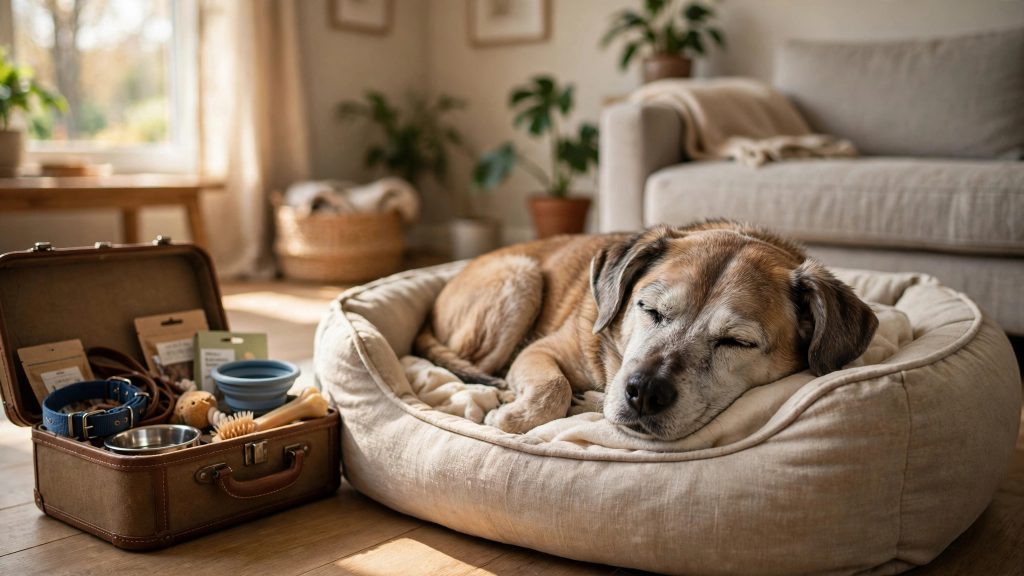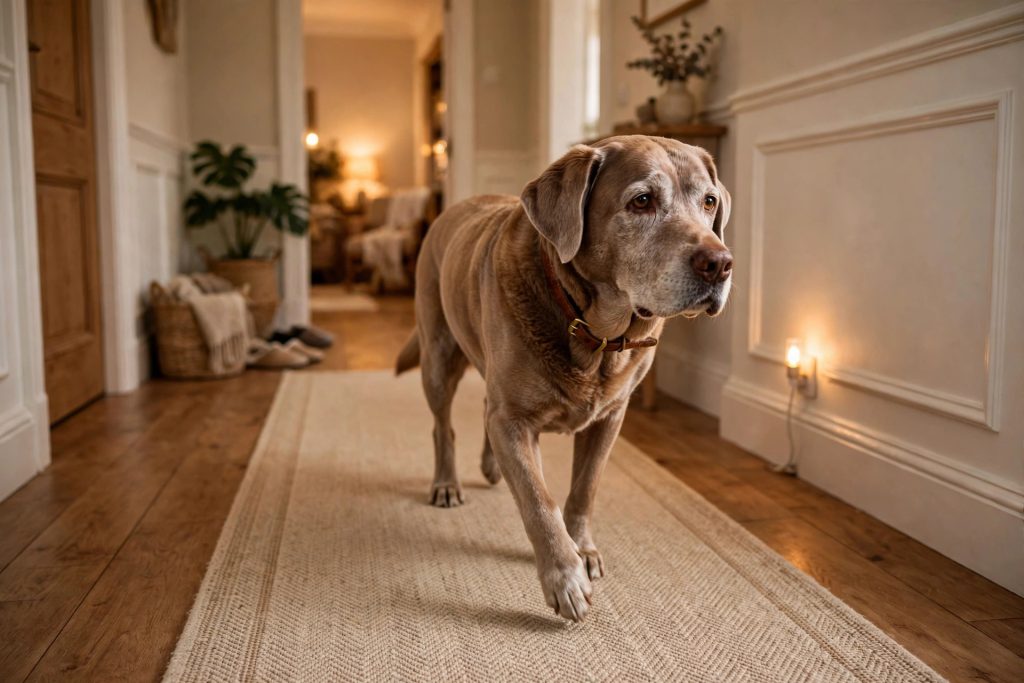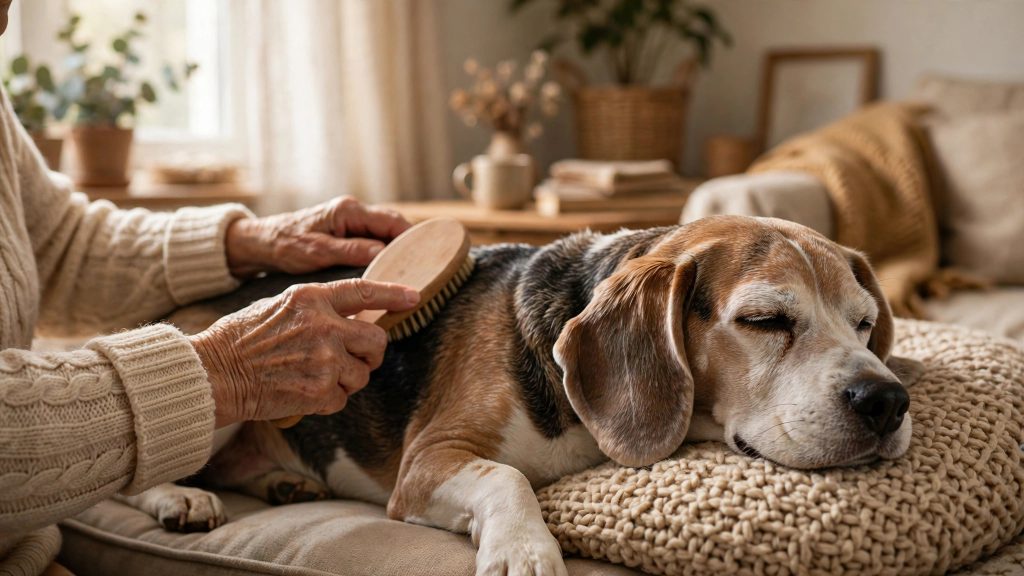
Walk into a pet shop and the senior-dog aisle is full of promises. Some of it genuinely changes an old dog’s daily comfort; some of it is marketing foam. This guide explains what actually helps — the features that matter in beds, ramps and steps — so you can buy once and buy right, whatever brand you choose.
Dog beds for senior dogs: what actually matters
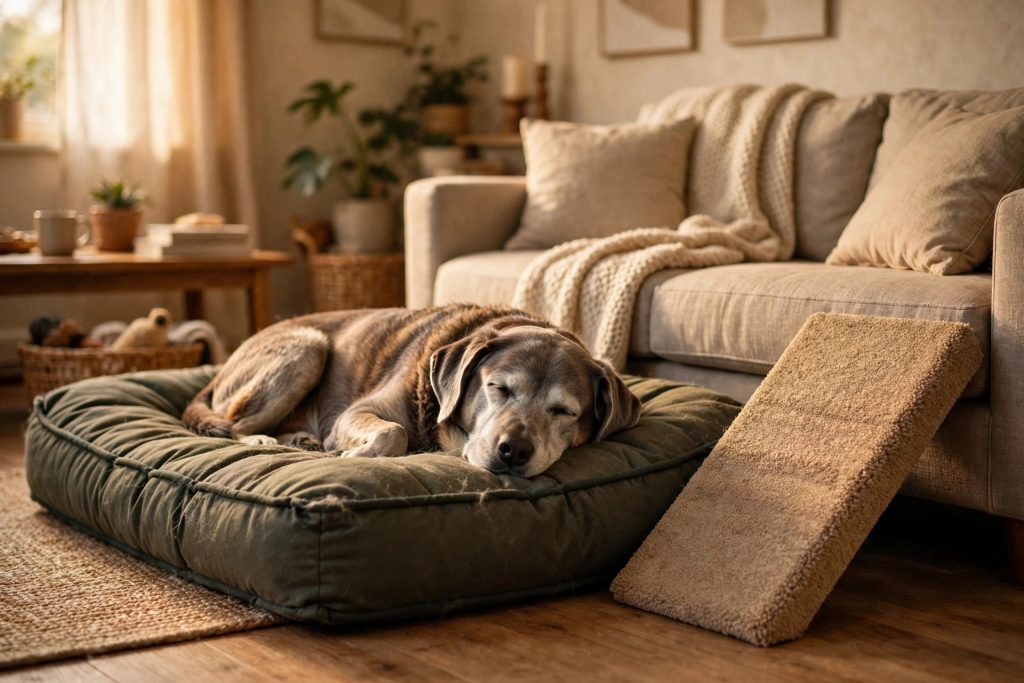
Memory foam or orthopedic foam is the real deal. A thick (at least 4 inches for large dogs) supportive foam base spreads weight evenly and relieves pressure on arthritic hips, elbows and shoulders. You should not be able to feel the floor when you press your hand firmly into it — if you can, your dog can too.
Look for:
- Low entry edge — high bolsters look cosy but a stiff dog has to climb them; one low side is ideal.
- Washable cover — non-negotiable. Senior dogs leak, dribble and get muddy; you’ll wash it weekly.
- Non-slip base — a bed that slides on hard floors is a fall risk (see our senior-proofing guide).
- Big enough to stretch fully — old dogs sleep stretched out to ease stiff joints, not curled.
Skip: thin polyester-stuffed beds (they flatten in weeks), heated beds without auto-shutoff, and anything sized for the dog he was at age five.
Ramps: the joint-saver most owners buy too late
Jumping down from a car or sofa loads a dog’s front joints with several times his body weight. A ramp removes that entirely.
A good senior-dog ramp has:
- A gentle slope — longer is kinder; steep ramps scare dogs and strain shoulders.
- High-traction surface — carpet or rubber tread, never smooth plastic or wood.
- Width and stability — wide enough that he doesn’t feel he’s on a tightrope, and rated well above his weight.
- For cars: folding or telescoping, light enough that YOU will actually use it every time.
Training tip: lay the ramp flat on the floor first, let him walk across it for treats for a day or two, then raise it gradually. Most dogs accept a ramp within a week; forcing it day one is how ramps end up in the garage.
Steps: fine for some dogs, wrong for others
Pet steps suit small, still-agile dogs who need help reaching a sofa or bed. They’re compact and cheap. But for dogs with arthritis, bad hips or poor eyesight, steps still demand climbing effort and balance — a ramp is almost always the kinder choice. If you do buy steps, choose wide, deep, carpeted treads, and place them against furniture that won’t shift.
What about joint supplements and extras?
Glucosamine and omega-3 supplements help some dogs modestly — ask your vet before starting, especially alongside medication. Raised feeding bowls, non-slip socks and a supportive harness with a handle (for helping him stand or climb) are all cheap, genuinely useful extras.
What to buy first (if budget is tight)
- The orthopedic bed — he spends 18–20 hours a day sleeping (here’s why senior dogs sleep so much); comfort there matters most.
- The ramp for the jump he makes most often — usually the car or the bed.
- Steps and extras later, if at all.
The bottom line
For beds, it’s thick supportive foam, a low entry and a washable cover. For ramps, it’s a gentle slope and real grip. For steps, it’s “only if he’s still sprightly.” Buy for the dog he is now — his joints will thank you every single day. Pair the gear with the daily rhythm in our senior dog care checklist and you’ve covered most of what an old dog needs.