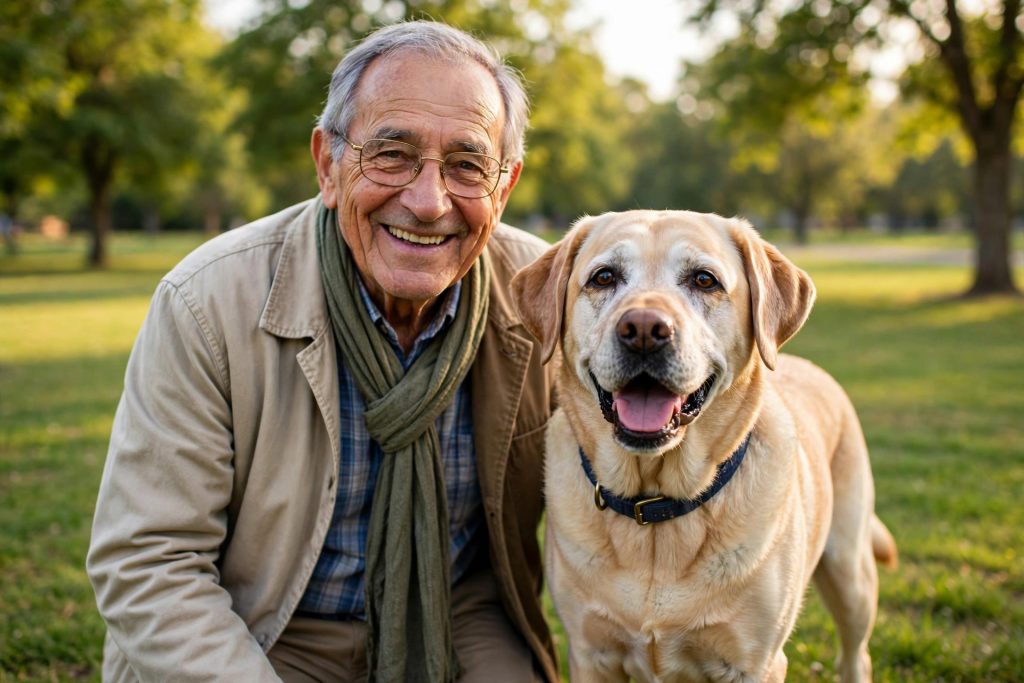
“When is a dog considered a senior?” sounds like a simple question, but there’s no single birthday that makes a dog old. A Great Dane can be a senior at six, while a Chihuahua is barely middle-aged at ten. Here’s the real answer — by size, by breed, and by the signs your own dog is showing.
Quick note: this article is general information, not veterinary advice. Your vet can tell you exactly where your dog stands.
The simple rule: the last 25% of life
Vets generally consider a dog a senior when they reach the last 25% of their expected lifespan. Because big dogs live shorter lives than small dogs, they hit that point much earlier.
Senior age by dog size
- Small dogs (under 20 lbs / 9 kg) — Chihuahuas, Dachshunds, Toy Poodles: senior from about 10–12 years. Lifespans of 14–16+ years are common.
- Medium dogs (20–50 lbs / 9–23 kg) — Cocker Spaniels, Border Collies, Beagles: senior from about 8–10 years.
- Large dogs (50–90 lbs / 23–41 kg) — Labradors, Golden Retrievers, German Shepherds: senior from about 7–8 years.
- Giant dogs (over 90 lbs / 41 kg) — Great Danes, Mastiffs, Bernese Mountain Dogs: senior from about 5–6 years, with lifespans often just 8–10 years.
So the 7-year rule you’ve heard (“a dog is a senior at seven”) is really only true for large breeds — and it’s also why so many wonderful “senior” dogs in shelters are actually large dogs of six or seven with years of love left.
Signs your dog is entering the senior stage
Age is a number; ageing is what you see:
- Greying muzzle and a cloudier look to the eyes
- Slowing down — shorter walks, more naps (here’s why senior dogs sleep so much)
- Stiffness, especially after rest or in cold weather
- Weight change — gaining from a slower metabolism, or losing muscle
- Hearing and vision not as sharp; slower to respond
- Lumps, bumps and dental wear becoming more common
What changes once your dog is a senior?
- Vet visits every 6 months instead of once a year, with blood work — our senior dog care checklist lays out the rhythm.
- Food — many dogs do better on a senior diet with joint support and slightly fewer calories.
- Exercise — keep moving, but shorter and gentler; consistency beats intensity.
- Home comforts — a supportive bed and non-slip floors matter more now (see our senior-proofing guide).
- Adoption maths — if you’re adopting, a dog’s “senior” label often means lower fees and seniors-for-seniors programs — one of the best bargains in the dog world.
The bottom line
A dog is considered a senior in the last quarter of their expected life — around 10–12 for small dogs, 8–10 for medium, 7–8 for large, and as early as 5–6 for giants. But “senior” is a stage of care, not a countdown: with the right vet rhythm, food and comfort, it’s often the calmest, sweetest chapter of a dog’s life.